
Skateboarding showed me I could learn things I never believed I could. That feeling deserves to be shared.
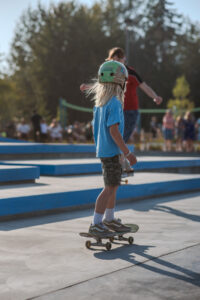
I’ve been working with kids since 2016 – specifically, youth with complex needs. In that work, the things I care most about are slow gratification, capacity building, and self-discipline. Watching a kid earn something difficult, piece by piece, is one of the most meaningful things I’ve ever been part of.
Skateboarding has been in my life since 2012 and has never left.
Those two things don’t seem like they’d connect at first. But the more I skated, and the more I worked with kids, the more I realized they were teaching me the same lessons from opposite directions.
The problem I kept seeing
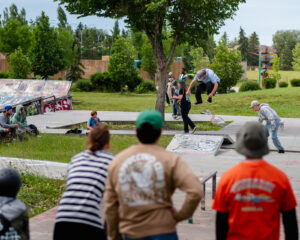
Edmonton has incredible skateparks. Seriously – we have million-dollar public facilities, free to use, spread across the city. The equipment isn’t expensive to start. And yet, I kept noticing fewer kids picking up boards than when I first started skating.
I don’t think it’s because there’s nowhere to skate. I don’t think it’s because it costs too much. I think it’s something much simpler: nobody is teaching kids how to start. The barrier isn’t access – it’s fear and intimidation.
Skateboarding teaches you early that failure is inevitable. The progress comes from persistence and problem-solving – and when it clicks, the feeling is unlike anything else.
That confidence doesn’t just stay on the board. It follows you everywhere. Skateboarding taught me I could learn things that I didn’t believe I was capable of. It made me okay with trying new things, okay with falling, okay with looking stupid for a while before getting good. That resilience from taking a fall, feeling scared, and learning to move forward anyway transfers into every corner of your life.
Why skateboarding works – especially for kids who struggle
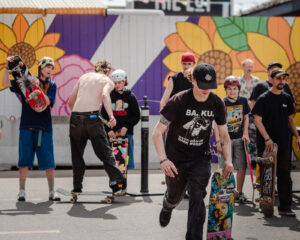
In my years working with youth, I’ve seen skateboarding reach kids that traditional programs couldn’t. A 2024 study published in Frontiers in Pediatrics by researchers at the University of Münster confirmed what I’d already witnessed – skateboarding is an effective intervention for children with ADHD, improving attention and self-motivation because the sport is self-directed by nature. No waiting for your turn. No team depends on you. Just you and the board.[1]
From my own professional experience working with neurodiverse youth, I’ve observed that children on the autism spectrum can also find a natural home in skateboarding – the physics, the mechanics, the depth of knowledge you can build. It rewards exactly the kind of focused attention many of these young people already carry. I want to be clear: this is my observation from years of working directly with youth, not a clinical claim. The research in this space is still emerging, and that’s a gap worth filling.
What both research and my own experience consistently show is this: skateboarding builds real confidence and a sense of belonging – for every person, regardless of how their brain works. USC researcher Neftalie Williams found that skaters develop strong problem-solving skills and the ability to connect with people from all walks of life, carrying those lessons far beyond the skatepark. For people who’ve never felt like they belonged in a sport, that matters. [2]
“Hopefully, kids realize you can do anything you want. Skateboarding can be that gateway.”
— Ryan Sheckler
In my experience in Edmonton’s skate community, some of the most technically skilled skaters are people with ADHD or autism. I don’t think that’s a coincidence.
What Project Rad is trying to do
“Skateboarding is not a hobby. And it is not a sport. Skateboarding is a way of learning how to redefine the world around you.”
— Rodney Mullen
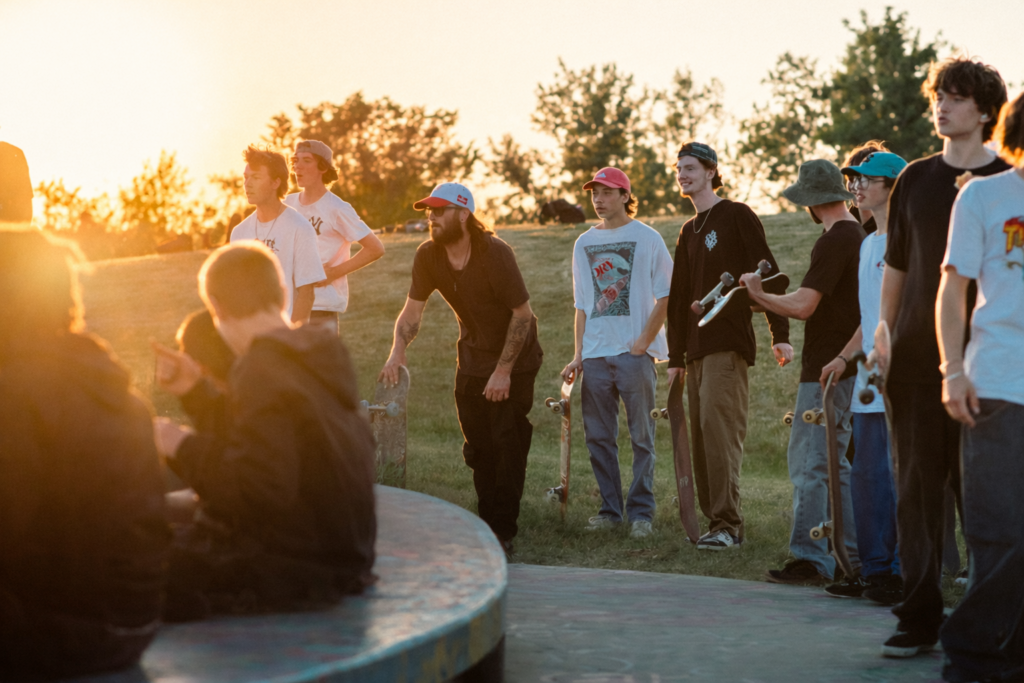
Project Rad exists to be the spark. We provide pro-level skateboards, so cost isn’t a barrier to starting. We use Edmonton’s public skateparks because they’re already here and they’re incredible. We hire certified, vetted coaches who know how to work with kids. And we teach kids how to fall (literally) – so that fear becomes something manageable instead of something that stops them.
The skateboarding culture already has generosity built into it. It’s completely normal to see an older skater hand their board to a kid at the park just to get them started, and passing on something that gave them so much. We want to scale that spirit into a real program.
I want to see Edmonton’s skateparks flooded with kids. I want a youth skate community where every kid has their own style, their own expression — eventually passing the torch to the next generation.
Cities like Vancouver and LA have booming youth skate scenes. Edmonton has the parks. We just need to show the city there’s demand – and provide the programming to meet it.
What skateboarding means to me
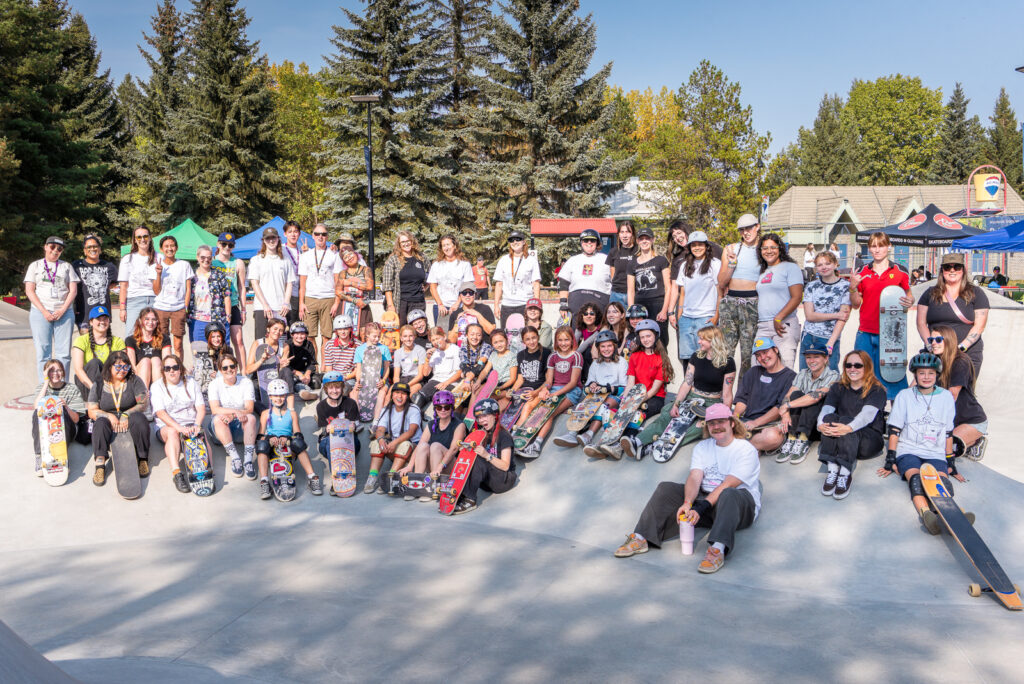
Freedom. Expression. Community. It brings out our truest selves and builds confidence in who we are that goes far deeper than any trick. When it happens in a safe, supportive environment – one where fear is normal, and failure is expected. It can genuinely change a kid’s life!
That’s what we’re building. We’re just getting started!
— David, Founder of Project Rad
Sources
Photos from Otterly Rad