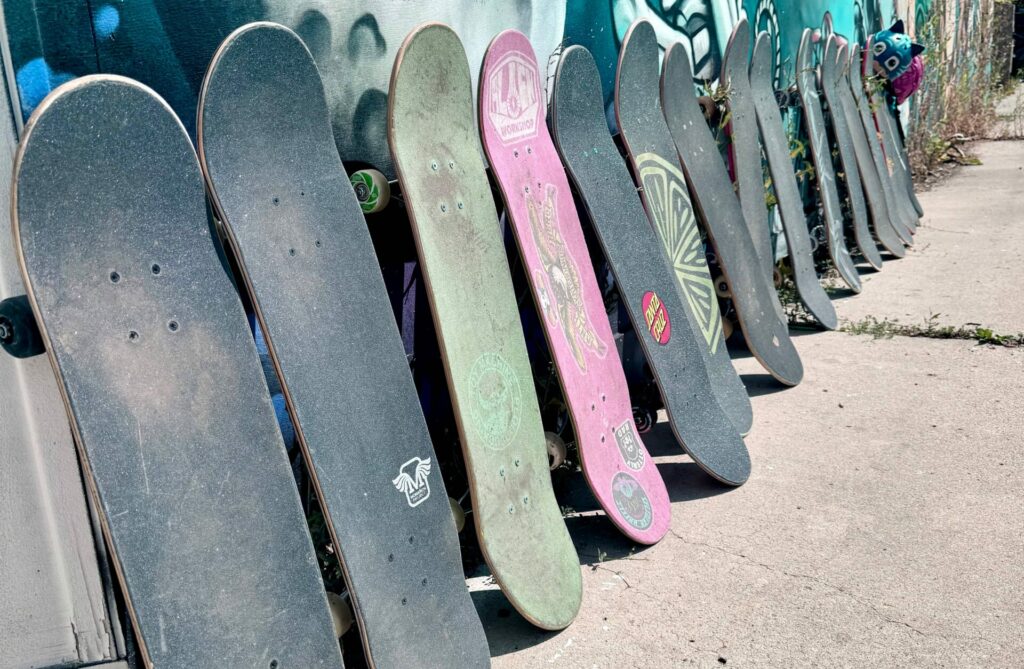
If you’ve ever stood in a store aisle staring at a wall of skateboards trying to figure out which one is actually worth buying, you’re not alone. It’s one of the most common questions we hear from parents signing their kids up for lessons at Project Rad — and it’s exactly why we sat down with Matt Wolf from Rumor Boardshop to get some real, experience-backed answers.
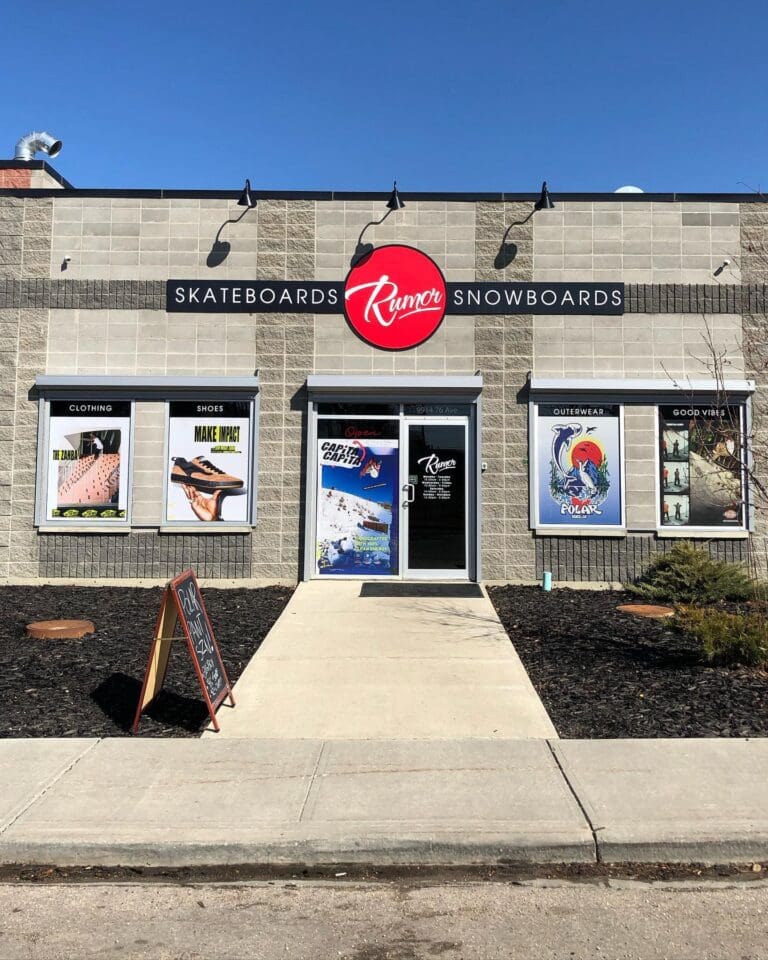
Who is Rumor Boardshop?
Built by skateboarders, for skateboarders, since May 2007. Two locations — Leduc and Edmonton. Nearly two decades of sponsoring local riders, backing community events, and putting real, tested gear in the hands of the people who actually use it.
That’s Rumor in short. But what makes them matter to a community like ours isn’t the years or the store count — it’s that they’ve stayed on the ground the whole time, always there for Edmonton skateboarding instead of just selling to it. That’s exactly the kind of local knowledge we wanted behind this guide.
The Q&A: What to Know Before You Buy
What’s the biggest mistake parents make when buying a first skateboard?
According to Matt, it comes down to two things: going too small, or relying on outdated information. Sizing and gear have changed over the years, and what worked for a board bought a decade ago isn’t necessarily the right call today.
Why can a $50 department store complete actually be worse than a $120 shop complete, even if they look similar?
The biggest difference is in the trucks and bushings — the parts that control how the board responds to your input. At a skate shop, all skateboard components can be upgraded individually as needed. With a department store board, you’re often stuck starting over from scratch rather than swapping out a single part. Matt also points out a simple but important distinction: boards sold at skate shops are built by skateboarders, for skateboarders. This means not only are we getting properly tested quality gear, but we are also cycling the money back into the community to further the sport.
How do you actually size a board?
For beginners, Matt bases sizing mainly on the rider’s age and size, though he’s quick to note it varies case by case:
- Around age 6: typically a 7.5″ to 7.75″ mid-sized board
- Around age 10: usually 7.75″ to 8″, depending on the kid’s size
- Late teens and adults: generally 8.25″ to 8.5″
- Anyone over 16 starting out: no smaller than 8.25″
Shoe size only really becomes a factor at the extremes — think men’s size 13 and up. Once a rider gets more experienced, board size becomes much more about personal preference and riding style: bigger boards for bowls and vert, smaller boards for technical flip tricks.
If unsure, you can always consult with Project Rad or your local skateshop!
What are the warning signs that a board is low quality, just from looking at it?
Two things to check right away: little to no concave in the deck, and flat, low-quality grip tape. Both are quick visual cues you can check even if you’re not buying from a shop.
Concave is the curve in a skateboard deck — side to side and nose to tail. It matters because it lets your feet feel the board’s edges without looking down, giving you better control and pop for turns, ollies, and tricks. Flat decks with little concave feel dead underfoot and are a sign of low quality.
Should parents buy new, or is secondhand a smart option for a beginner?
Matt’s recommendation is to go through a skate shop, mainly because of the expertise involved in making sure a board actually fits the rider. Used gear carries real risk that isn’t always obvious at a glance — waterlogged decks, rusted bearings, mismatched parts, and flat-spotted wheels can all cause damage that can’t be undone. A board that’s sat out in rain or humidity loses the snap it’s supposed to have, even if it looks fine. It is possible to get a good deal on a used board, but it takes a genuinely experienced skater to know what to look for.
What parts of a board wear out first — and can you just replace those instead of buying a whole new setup?
Bearings and the deck itself wear out the fastest. For beginners, the good news is that a deck will last a long time. As skaters advance, the deck becomes the part they’ll replace most often. Either way, these are all individually replaceable and upgradeable parts, so a new setup doesn’t mean starting from zero.
Note: You can make your board last longer by keeping it out of the sun when you’re not riding, keeping the bearings clean (no sand, dirt, or mud), and keeping the board away from water (rain, puddles, and high humidity
Does it matter if a kid is skating at a skatepark versus just cruising the neighborhood?
For the first few days on a board, Matt recommends building balance somewhere smooth, open, and low-stakes — an empty parking lot, an emptied-out hockey rink, or something similar. Once a rider is comfortable pushing and cruising, the skatepark is the natural next step.
Why This Matters for Project Rad Families
A lot of what Matt shared lines up with what we see every week at Project Rad camps and lessons — the right setup makes learning easier, safer, and a lot more fun, especially in those first few sessions. If you’re gearing up a new skater and want a second opinion beyond a big-box store shelf, a visit to Rumor Boardshop in Leduc or Edmonton is a solid move, whether that’s your very first board or your fifth deck replacement.
A huge thank you to Matt Wolf and the whole Rumor Boardshop team for taking the time to share their knowledge with our community.
Check out our blog post on What You Need to Start Skateboarding. If you’re looking to buy a board & participate in Project Rad programs, contact us to hear about our discounts at the Rumor shop!!