The short answer
The sooner the better.
Kids can start skateboarding as early as 3. There’s no “too young.” There are just different expectations at different ages.
Here’s what that looks like.
The catch: under 6 means private lessons
Any lesson for a kid under 6 is a private lesson. That makes it more expensive than a group lesson, and we’d rather you hear it from us up front.
Why starting early works
The older we get, the scarier skateboarding feels. Start young, and that fear never gets a chance to build.
We keep it fun first. Less drilling, more playing. We don’t have it all figured out, but we’ve seen it again and again: when a kid is having fun, they keep coming back to the board. And that’s where the real learning happens.
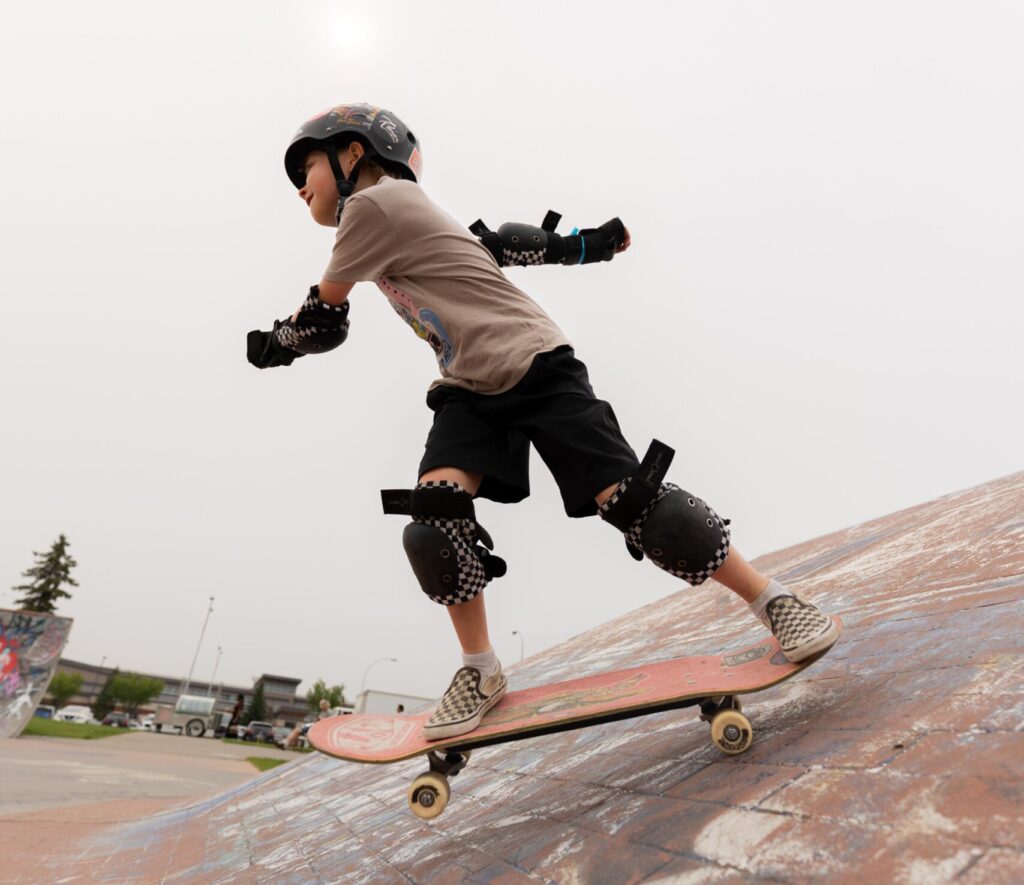
Photo from Make it Rad 2026 by Sport Edmonton
Ages 3 to 6: what lessons look like
Mostly riding, balance and ramps.
These kids aren’t working on the fine motor skills that ollies, flip tricks and technical flat ground need. That comes later. Right now it’s all about ramps, because ramps give them speed to work with.
What we focus on:
- Dropping in
- Pumping and control
- Quarter pipe stalls
- Small airs
Ages 6 and up: more skill, same fun
At 6, lessons get broader and more skill-specific.
For the younger end, it’s fast-paced fun with support. For older participants, it gets a bit more technical, while we keep working on confidence.
Kids 6 to 14 can also join us on school PD days. See our indoor skateboarding camps for the 2026/27 school year.
Every age walks away with the same things: more resilient, confident, and aware of their body.
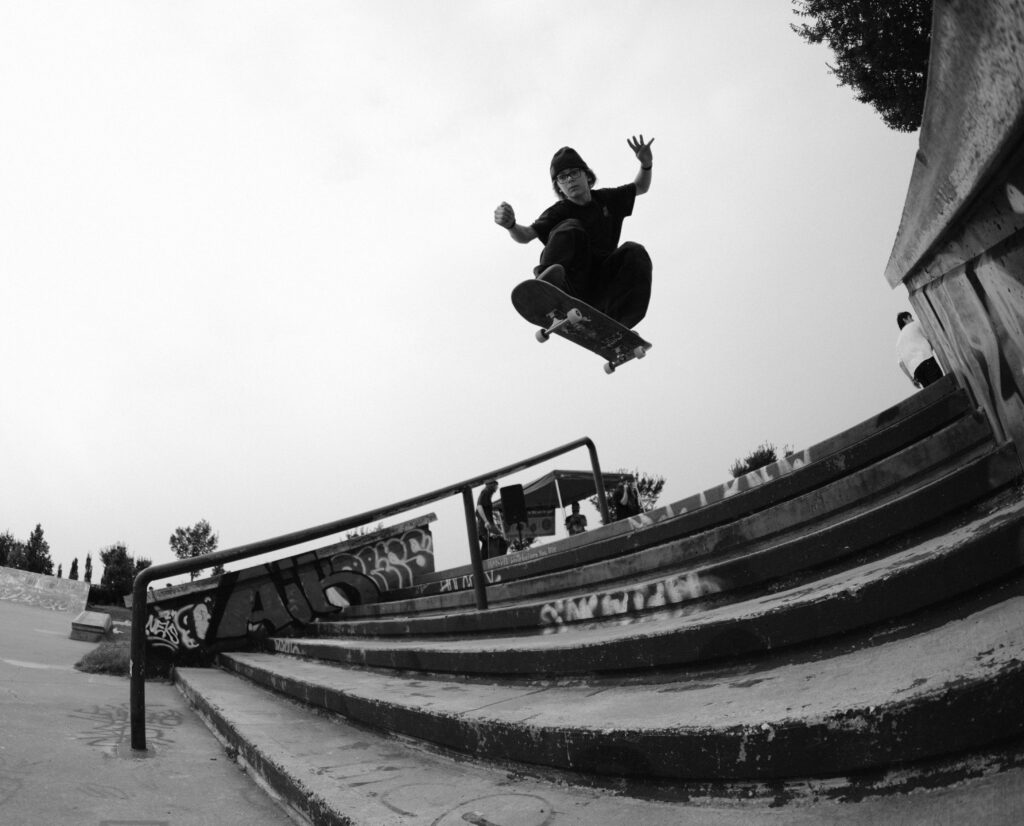
Photo from Make it Rad 2026 by Greg Slowka
The real goal: skating between lessons
The most important thing about lessons isn’t what happens in them. It’s what happens after.
The goal is for your kid to start skating on their own between lessons. That’s where the confidence comes from (and skateboarding becomes more fun). It builds self-identity. It’s where the progression and the fun really take off.
Note: Don’t force them to work on drills, make them just have fun with the skills they have. We don’t want to make our children resent skateboarding.
Need a board first? Start with our first skateboard buying guide.
Check what you need to start skateboarding, then use our Edmonton skatepark guide to find where to ride.
Lessons vs. teaching yourself
Self-taught skaters learn a lot. They put in the hours, they get creative, and they fall in love with it on their own terms.
But lessons give you things trial and error can’t:
- Someone watching in real time who can see what you can’t feel
- Fundamentals first, so bad habits don’t get a chance to set in
- A clear next step, instead of guessing what to try next
- Help with falling and fear, which is where a lot of kids get stuck
Lessons also help you learn significantly faster.
Teaching yourself works because of the time you put in. Pair that time with what a coach knows, and the growth, the skills and the confidence all come quicker.
The best answer is both.
We learn by doing. Try something. Miss it. Try it again. Then bring that mistake into a lesson, where a coach can show you exactly what went wrong and how to fix it. That loop is powerful. Skate on your own, learn in a lesson, repeat.

It’s never too late
The youngest skater in our lessons right now is 3. The oldest is 47. (as of November 9, 2026)
All ages. All skill levels. All welcome.
Quick answers
What’s the youngest age for skateboard lessons? 3. Lessons for kids under 6 are private.
Is my kid too old to start? No. Younger is easier, but it’s never too late.
Do they need to skate outside of lessons? It isn’t required, but it’s the goal. Skating on their own is what builds confidence and progression.
Ready to roll?
Looking for skateboard lessons in Edmonton? See our lessons and get your kid on a board.
Want to see how it works? Read about our indoor skateboard classes in Edmonton.